Editorial Director and current Faculty Member, BPMInstitute.org
Service-Oriented Architecture (SOA) represents a more flexible approach to building IT solutions. Combining SOA with other complementary technologies and approaches further enhances the ability to build more agile solutions. These solutions are easier to change, provide improved access to time-critical information and are more aware of – and responsive to – business events throughout the value chain.

Business Relationship Manager - Product Lifecycle Management, Chevron Corporation
Complex and proprietary ERP systems symbolize the final evolution of “Old IT”. They are the embodiment of a frame of mind that is inherent in the culture of the industrial economy and its great invention – the assembly line. That mindset attempts to organize every activity down to the lowest levels of detail. It makes rules and regulations for everything and then tries to run each activity over and over, faster and faster without changing anything. This is how you get greater and greater productivity at lower and lower costs; this is what we call efficiency.
Business architecture is poised to make significant inroads this year. While business architecture emerged as a distinct area of focus in 2006 and matured during 2007, it is poised for a big year in 2008. A number of factors are beginning to converge that will make 2008 a turning point for this essential discipline including a new focus on standards, convergence of frameworks and solidification of the role of business architecture in enterprise governance.
Managing Partner, Knowledge Partners International LLP
In these pages over the last year we have focused on the business value of separating Business Rules from Business Process, and using Business Decisions as both organizing principal for those Business Rules, and as a means of managing the rules. The value of the Business Decision Management (BDM) approach is multifold, as the Business Decision is the natural means of connecting Business Rules to Business Process in a BPM environment.
Business Relationship Manager - Product Lifecycle Management, Chevron Corporation
I have long railed against OMG’s inexcusable omission of even minimal support for model portability in the BPMN standard. In the forever-stuck-in-final-edit version 1.1, they still haven’t even provided an XML storage format, or serialization, for BPMN, much less a list of the elements and attributes that any “compliant” tool must support. Yet in my BPMN training, students simply assume such portability exists.
Business Relationship Manager - Product Lifecycle Management, Chevron Corporation
With the advent of rich internet applications and extensible interfaces such as AJAX, we now have the ability to quickly create mashups to solve specific business problems using standard dynamic interfaces that front services. Mashups provide powerful ways to take existing applications and services, and create something even more useful for business.
We could say that the lines between the enterprise and the Web are blurring…first blurred at the content or information levels with the early mashups, and now at the service and process levels as well.
Business Relationship Manager - Product Lifecycle Management, Chevron Corporation
Service Oriented Architecture is one thing; creating a high-scale – and resilient – SOA is something else altogether. Let’s examine several approaches to high-scale SOA computing.
Editorial Director and current Faculty Member, BPMInstitute.org
Recent tactical success in the utilization of Web services has brought renewed attention to the timing for a strategic commitment to Service Oriented Architectures (SOA). Early adopters have been investing in SOA for the past five years but now the development of more rigorous methodologies and technologies, and the maturing of standards, are making SOA accessible to everyone.
Across the federal government, large numbers of baby boomers are reaching the age of retirement. In 2006, more than 60,000 people left the civil service. The federal Office of Personnel Management believes that 2009 will be the peak year for boomer retirements. What can federal agencies do now, to stop this massive loss of institutional knowledge?
Stepped-up recruiting and staffing efforts will help a little, as will additional emphasis on outsourcing.
Business Relationship Manager - Product Lifecycle Management, Chevron Corporation
The notion of process is of utmost value to organizations, but the reality has often fallen short. The power of process is potentially far more powerful than today’s fragmented practices. With the right approach, however, process can have even more impact on organizational results than it did in the eighties and nineties. More specifically, process is the key to designing and operating organizations to deliver unique, sustained value.
You're looking for a way to improve your process improvement skills, but you're not sure where to start.
Earning your Business Process Management Specialist (BPMS) Certificate will give you the competitive advantage you need in today's world. Our courses help you deliver faster and makes projects easier.
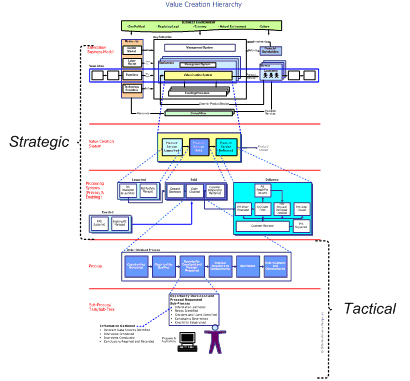
Your skills will include building hierarchical process models, using tools to analyze and assess process performance, defining critical process metrics, using best practice principles to redesign processes, developing process improvement project plans, building a center of excellence, and establishing process governance.
The BPMS Certificate is the perfect way to show employers that you are serious about business process management. With in-depth knowledge of process improvement and management, you'll be able to take your business career to the next level.
Earning your Business Process Management Specialist (BPMS) Certificate will provide you with a distinct competitive advantage in today’s rapidly evolving business landscape. With in-depth knowledge of process improvement and management, you’ll be able to take your business career to the next level.
Earning your Business Process Management Professional (BPMP) Certificate will elevate your expertise and professional standing in the field of business process management. Our BPMP Certificate is a tangible symbol of your achievement, demonstrating your in-depth knowledge of process improvement and management.
Make the most of your hard-earned skills. Earn the respect of your peers and superiors with Business Process Management Certification from the industry's top BPM educational organization.
Earning your Operational Excellence Specialist Certificate will provide you with a distinct advantage in driving organizational excellence and achieving sustainable improvements in performance.
Earn your Operational Excellence Professional Certificate and gain a competitive edge in driving organizational excellence and achieving sustainable improvements in performance.
Earn your Agile BPM Specialist Certificate and gain a competitive edge in driving business process management (BPM) with agile methodologies. You’ll gain a strong understanding of how to apply agile principles and concepts to business process management initiatives.
The Business Architecture Specialist (BAIS) Certificate is proof that you’ve begun your business architecture journey by committing to the industry’s most meaningful and credible business architecture training program.
When you earn your Business Architecture Professional (BAIP) Certificate, you will be able to design and implement a governance structure for your organization, develop and optimize business processes, and manage business information effectively.
Make the most of your hard-earned skills. Earn the respect of your peers and superiors with Business Architecture Certification from the industry's top BPM educational organization.
The Digital Transformation Professional Certificate is the first program in the industry to cover all the key pillars of Digital Transformation holistically with practical recommendations and exercises.