Many strategic initiatives today are focused on enterprise architecture (EA) development, business process management (BPM) and service-oriented architecture (SOA) development.

BPM, SOA, and EA are Converging
read more

Many strategic initiatives today are focused on enterprise architecture (EA) development, business process management (BPM) and service-oriented architecture (SOA) development.

Is anything really new?
The fashion world, television and the IT landscape all have something in common. It often seems like we are seeing reruns: centralize versus decentralize; market proliferation versus market consolidation, privacy versus security, and standards versus innovations. Now, every time you turn around you hear about SOA. Does SOA really matter, or is it just another hard to explain three letter acronym?
First, I believe it does really matter, and that it is different.
Is anything really new?

Process management is comprised of end-to-end documentation, improvement (from radical to continuous), and management of organizational processes. Decisions are data-driven and based on customer satisfaction metrics, quality, timeliness, and cost. The responsibility of monitoring process performance and facilitating process changes belongs to a process advisor or manager. Administering processes is dramatically enabled by business process management technology.
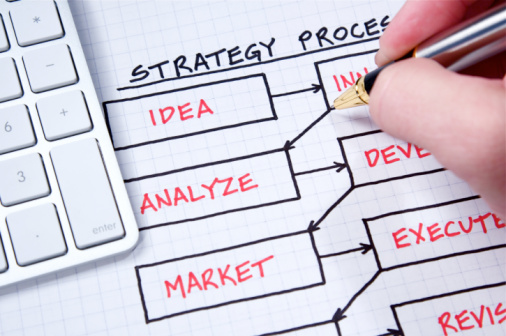
Business Agility is the ability to run profitably in changing economic conditions by producing high-quality, customer-focused goods and services. Theorists in business management and technology agree the key to achieving agility is in a focus on business processes.
For instance, In the February, 2007 issue of Harvard Business Review, “How Managers’ Everyday Decisions Create or Destroy Your Companies Strategy”, Bower and Gilbert describe intransigence of sales personnel at dealerships for a leading automotive manufacturer.

Simon Hayward is chief of research for software and a Gartner fellow emeritus. With an interest in the relationship of business processes, software applications and software infrastructure, he oversees research in the software sector and develops integrative activities between research areas. He will deliver the featured analyst keynote address at the Business Process Management Conference in June in San Francisco.

Companies have long understood the need for project management; but project based business analysis has always been an open item for discussion and displacement. Businesses are beginning to see the value in having the expertise that a business analyst can bring to a project. However, these same organizations continue to struggle with determining the appropriate area of the company that will serve as the best fit for the business analyst (BA) role, in part due to a misunderstanding of the differences between a business unit focused business analyst (BFBA) and a technical sy

Molson Coors is the fifth largest global brewer with a combined annual volume of 60 million hectoliters and net sales of more than $6 billion. It leads market share in Canada and in the UK with growth profile in the US and emerging market opportunities in Brazil. Molson Coors employs 15,000 employees worldwide in 18 breweries serving 40 brands.
Coors turned to BPM in 2001 before the merger with Molson to develop a business architecture that would organize its business processes in a structured way.

Many firms are just doing isolated one-time process improvements with little consideration to deploying the sustainable improvement and management of their large, cross-functional business processes. They don’t realize that the fundamental concepts underlying BPM are all about customer focus and value creation and that requires a different leadership mindset.

I’m consulting now…at the project and strategy levels…and thus finding that a lot of real work needs to be done to get SOAs up-and-running. For most organizations, the first step of their SOA project is to figure out how much this SOA will cost. Thus, you can budget appropriately and obtain the funding.
It’s a good first step, but most organizations that want to build an SOA don’t have a clue how to approach the cost estimation process. In many cases, they grossly underestimate the cost of their SOA, hoping their bosses and accountants won’t notice later.

In today’s ever-changing business environment, it is imperative for enterprises to adapt quickly to not only deal with the change, but in many cases, exploit it for competitive advantage. Change can manifest itself in the form of new technology, new entrants into enterprises’ market space, competitors adapting new processes, changes in customer preferences and demographics, new government regulations, and so on. The rate of change in recent years has been much higher than in the past.
Everyone starts here.
You're looking for a way to improve your process improvement skills, but you're not sure where to start.
Earning your Business Process Management Specialist (BPMS) Certificate will give you the competitive advantage you need in today's world. Our courses help you deliver faster and makes projects easier.
Your skills will include building hierarchical process models, using tools to analyze and assess process performance, defining critical process metrics, using best practice principles to redesign processes, developing process improvement project plans, building a center of excellence, and establishing process governance.
The BPMS Certificate is the perfect way to show employers that you are serious about business process management. With in-depth knowledge of process improvement and management, you'll be able to take your business career to the next level.
|
Courses
|
|
|
|
Courses
|
|
|
|
Courses |
|
|
Business Architecture
|
|
|
|
Courses
|
|
|
|
Courses |
Certificate
|
|
Courses |
Certificate
|
|
Courses |
Certificate
|