Business Relationship Manager - Product Lifecycle Management, Chevron Corporation
Erik Weihenmayer is an acrobatic skydiver, long distance biker, marathon runner, skier, mountaineer, ice climber, and rock climber. Erik graduated from Weston High School in Connecticut in 1987. As the school’s wrestling captain, he represented the state in National Freestyle Wrestling Championships. In 1991, he graduated from Boston College, and in the same year, he trekked in the Pamir Mountains of Tajikistan.
Business Relationship Manager - Product Lifecycle Management, Chevron Corporation
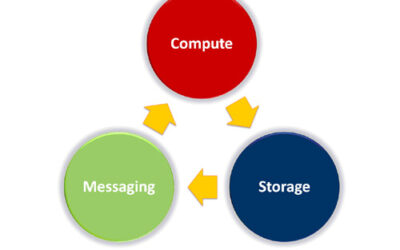
I recently attended a dot-com launch. What was unique about this particular launch was that the company does not own any servers, and they do not have a data center or even rack space in a co-location facility! Instead they run on virtual servers controlled with a Web service interface, and store their data “in the cloud” using a Web service.
Virtualization is almost a cliché in 2007. IDC lowered its server revenue forecast as a direct result of virtualization. Especially because IDC’s report missed the new phenomenon known as “Web Scale Computing”.
Business Relationship Manager - Product Lifecycle Management, Chevron Corporation
Two problems frequently encountered in planning for new product development are what I call the “depth problem” and the “breadth problem”. In my article “First Things First”, I talked about the depth problem – basically failing to spend time and resources establishing what to make or implement (the right concept) before committing to planning how to make it.
Business Relationship Manager - Product Lifecycle Management, Chevron Corporation
How many times have you heard that SOA is the next big thing? It’s particularly fascinating how the perspectives of customers and vendors evolve on “the latest thing” and where they find the value. The Service Oriented Architecture (SOA) wars have been interesting to watch for exactly this reason. Integration vendors, pure-play BPM vendors and leading application platforms all have an SOA story. The major vendors have focused education efforts on teaching people what SOA is, and how it can make their infrastructures more “agile”.
Business Relationship Manager - Product Lifecycle Management, Chevron Corporation
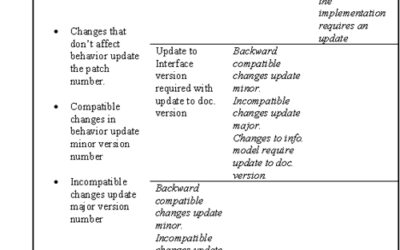
Service-oriented architectures offer many important advantages to the enterprise in terms of agility, flexibility, consistency, reuse, integration and others. But of course, there’s no free lunch. And one of the costs of these advantages is the increase complexity of service lifecycle management and versioning.
Once a service has its first consumer, we have bought off on having to maintain and support that service for an agreed upon period of time.
Business Relationship Manager - Product Lifecycle Management, Chevron Corporation
The Business Process Modeling Notation (BPMN) standard from OMG has a lot to recommend it, but it’s not perfect. Since late February of this year, I’ve been doing BPMN training, and through that I have come to appreciate the subtle power of the notation and how it maps – or sometimes not – to the way real business analysts and architects want to model their processes.
Business Relationship Manager - Product Lifecycle Management, Chevron Corporation
The move to SOA and BPM means that application development can be more modular. But data is the essential foundation. BPMInstitute.org: You are now out on your own. What does BizThink do? Fletcher: We have a unique offering which involves process redesign and SOA and...
Business Relationship Manager - Product Lifecycle Management, Chevron Corporation
The inability of earlier generations of application development software to support effective collaboration between business and IT is the source of a good deal of confusion, wasted efforts, and delayed ROI to the organizations that are implementing new application...
Business Relationship Manager - Product Lifecycle Management, Chevron Corporation
So yes, BPM is important. Maybe even revolutionary. But getting BPM right remains a challenge as practitioners in the field know only too well. We believe that in many ways, BPM platforms have outpaced BPM practice.
You're looking for a way to improve your process improvement skills, but you're not sure where to start.
Earning your Business Process Management Specialist (BPMS) Certificate will give you the competitive advantage you need in today's world. Our courses help you deliver faster and makes projects easier.
Your skills will include building hierarchical process models, using tools to analyze and assess process performance, defining critical process metrics, using best practice principles to redesign processes, developing process improvement project plans, building a center of excellence, and establishing process governance.
The BPMS Certificate is the perfect way to show employers that you are serious about business process management. With in-depth knowledge of process improvement and management, you'll be able to take your business career to the next level.
Earning your Business Process Management Specialist (BPMS) Certificate will provide you with a distinct competitive advantage in today’s rapidly evolving business landscape. With in-depth knowledge of process improvement and management, you’ll be able to take your business career to the next level.
Earning your Business Process Management Professional (BPMP) Certificate will elevate your expertise and professional standing in the field of business process management. Our BPMP Certificate is a tangible symbol of your achievement, demonstrating your in-depth knowledge of process improvement and management.
Make the most of your hard-earned skills. Earn the respect of your peers and superiors with Business Process Management Certification from the industry's top BPM educational organization.
Earning your Operational Excellence Specialist Certificate will provide you with a distinct advantage in driving organizational excellence and achieving sustainable improvements in performance.
Earn your Operational Excellence Professional Certificate and gain a competitive edge in driving organizational excellence and achieving sustainable improvements in performance.
Earn your Agile BPM Specialist Certificate and gain a competitive edge in driving business process management (BPM) with agile methodologies. You’ll gain a strong understanding of how to apply agile principles and concepts to business process management initiatives.
The Business Architecture Specialist (BAIS) Certificate is proof that you’ve begun your business architecture journey by committing to the industry’s most meaningful and credible business architecture training program.
When you earn your Business Architecture Professional (BAIP) Certificate, you will be able to design and implement a governance structure for your organization, develop and optimize business processes, and manage business information effectively.
Make the most of your hard-earned skills. Earn the respect of your peers and superiors with Business Architecture Certification from the industry's top BPM educational organization.
The Digital Transformation Professional Certificate is the first program in the industry to cover all the key pillars of Digital Transformation holistically with practical recommendations and exercises.
By completing the Process Automation Specialist Certificate, you will not only enhance your modeling skills but also demonstrate a serious commitment to advancing business process management within your organization.